Concrete scanning for basement conversions
What you need to know about scanning existing concrete slabs and walls before a basement conversion or underpinning project starts.
By Terry Bagust, Co-founder and Managing Director
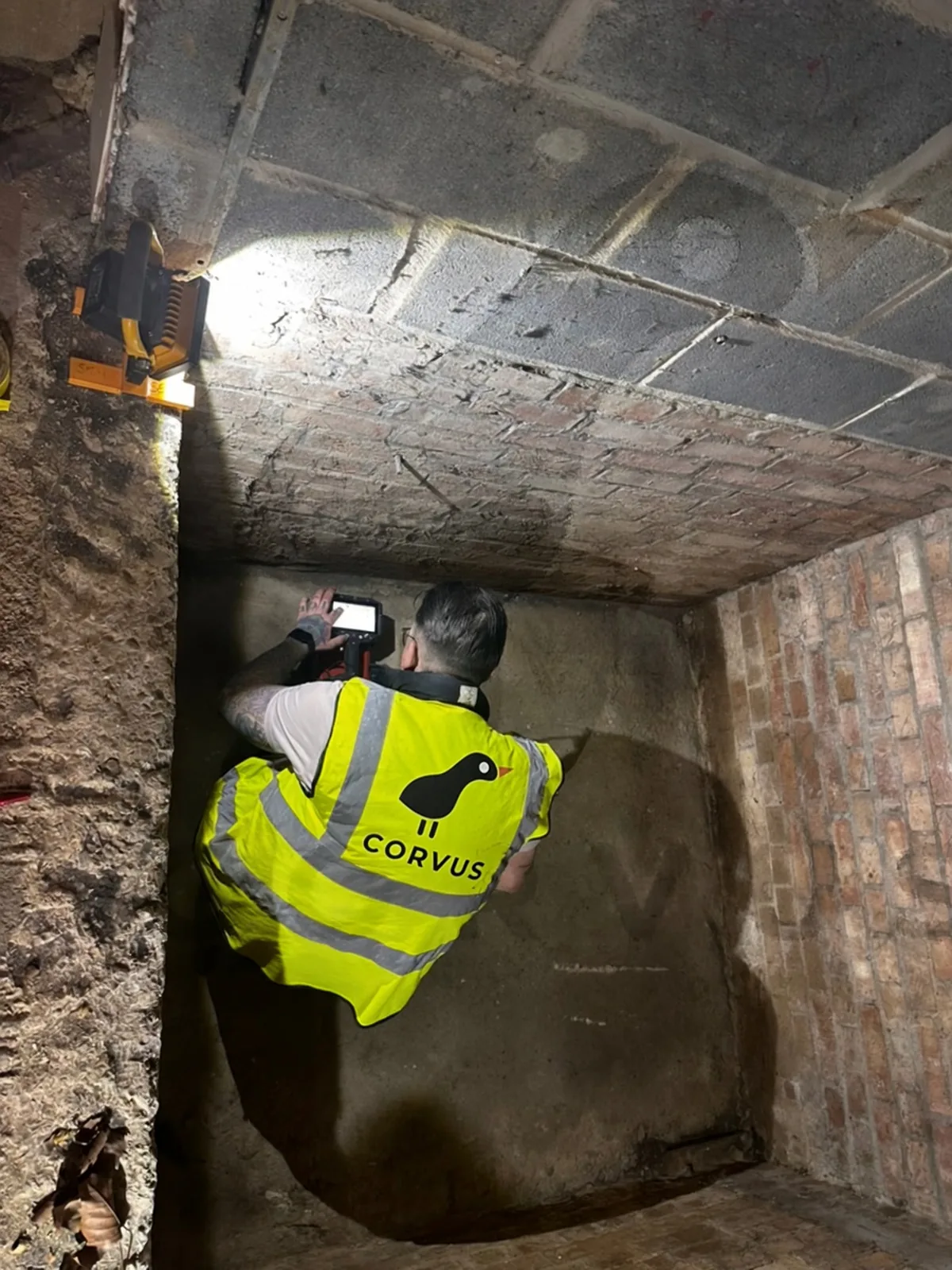
Basement conversions and underpinning projects involve cutting into, drilling through, and working alongside existing concrete that nobody on the project team has ever seen the inside of. The structure is usually decades old, the drawings are usually missing or unreliable, and the work happens directly below an occupied building. That makes concrete scanning one of the most useful early steps on a basement project. Here is what you need to know before the work starts.
Why basements are different
On new or recent construction, the slab type is usually known and the drawings, however imperfect, exist. Basement conversions are the opposite. You are working with an existing structure, often a Victorian or Edwardian property, or a mid-twentieth-century building, whose foundations, retaining walls, and ground-floor slab were never documented in a way that survives.
You also cannot simply stop and rethink halfway through. Excavating a basement removes support from the structure above and from neighbouring buildings. The sequencing of underpinning, propping, and slab removal has to be right first time. Scanning the existing concrete before the work is designed gives the engineer real information to design against, rather than assumptions that only get tested once the digger is in the hole.
What scanning establishes
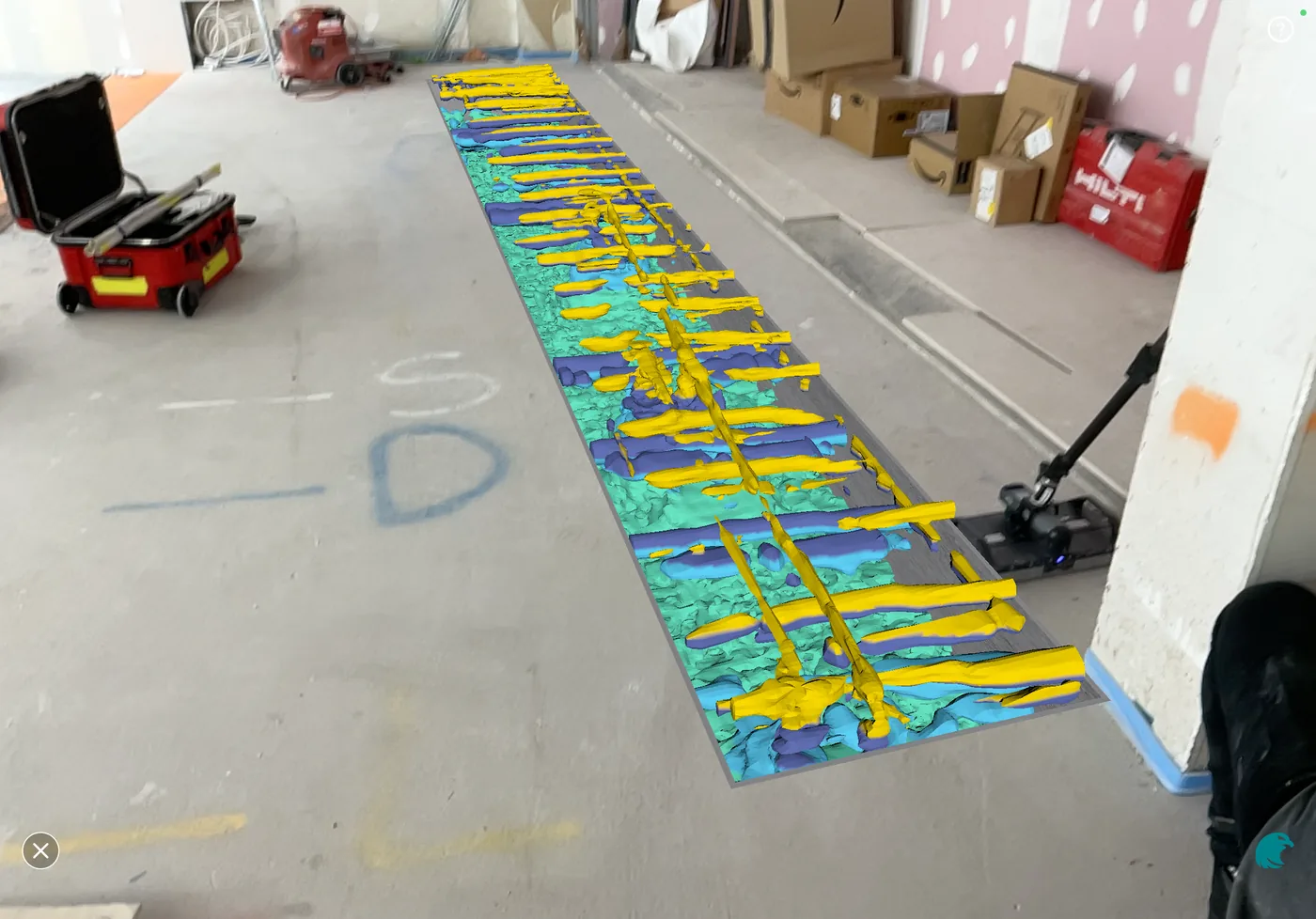
Before a basement conversion, scanning is used to build a picture of what is already there:
- Whether the existing ground-floor slab is reinforced, and how heavily.
- The thickness of slabs and retaining walls, where access allows.
- The reinforcement layout in existing retaining structures and walls.
- Embedded services running through or beneath the slab.
- The construction of existing foundations and footings, where they can be reached.
This matters at two stages. During design, knowing whether the existing slab is reinforced and how the retaining walls are built feeds directly into the structural scheme. During construction, knowing where reinforcement and services sit lets the team plan cutting, drilling, and coring around them, for instance when forming openings, fixing new structural elements, or installing the new waterproofing and drainage.
GPR and ferro scanning together
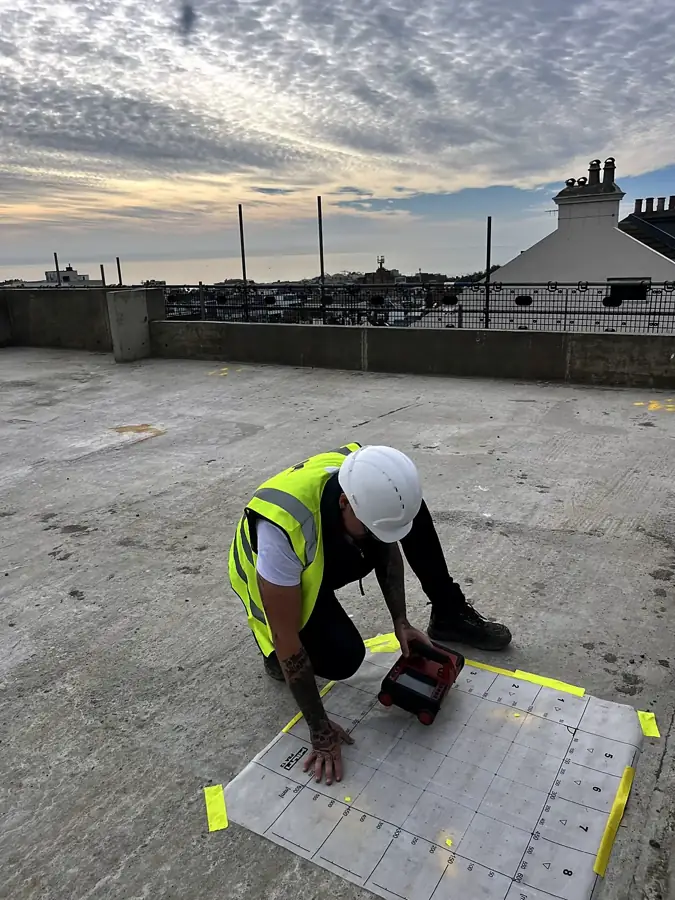
Two techniques are commonly used. GPR is the broader tool: it sees through concrete to locate reinforcement, estimate element thickness, find services, and identify voids or anomalies. Ferro scanning, electromagnetic cover meter scanning, is the more precise tool for locating reinforcement bars and measuring cover depth accurately over a defined area.
On a basement project they complement each other. GPR gives the overall picture and reaches deeper into thick elements; ferro scanning gives accurate, localised reinforcement and cover information where a new connection or opening is planned. Where a scheme depends on tying new structure into old, the precise ferro data on the existing reinforcement is often what the connection design needs.
The practical constraints
Basement scanning is rarely done on a clean, open slab. The work usually happens in an occupied house, with finishes still in place, limited headroom, and restricted access. A few things are worth knowing in advance.
Scanning works from an accessible surface. Where a slab is buried under screed, tiling, or timber flooring, the surveyor scans from whatever surface is available, and the more finishes there are between the antenna and the concrete, the more they affect the result. Lifting a small area of finish in advance can significantly improve the data.
Damp is the other common factor. Basement and below-ground concrete is often saturated, and very wet concrete attenuates the GPR signal and reduces the depth the survey can reliably reach. This does not make the survey pointless, but it does shape what the data can promise. A surveyor should be told the slab is likely to be damp so expectations are set honestly before the visit.
Practical advice for commissioning
Get the scan done early, ideally before the structural scheme is finalised, so the design is built on real information about the existing structure. Brief the surveyor on the building’s age, what is known of its construction, and where finishes can or cannot be lifted.
Expect scanning to inform the project rather than replace exploratory work entirely. On older structures, some opening up is often still needed to confirm exactly how foundations and walls are built. But scanning can reduce how much of that is needed, tells the team where to look, and removes much of the guesswork from a project where guessing is expensive. On a basement conversion, knowing what is in the concrete before you touch it is fundamental to working safely below an occupied home.
What this means for your job
For basement and underpinning work in London, see concrete scanning in London.