NDT and GPR for housing associations and social landlords
Why non-destructive testing suits housing associations, and how to integrate scanning and testing into a planned maintenance programme.
By Terry Bagust, Co-founder and Managing Director
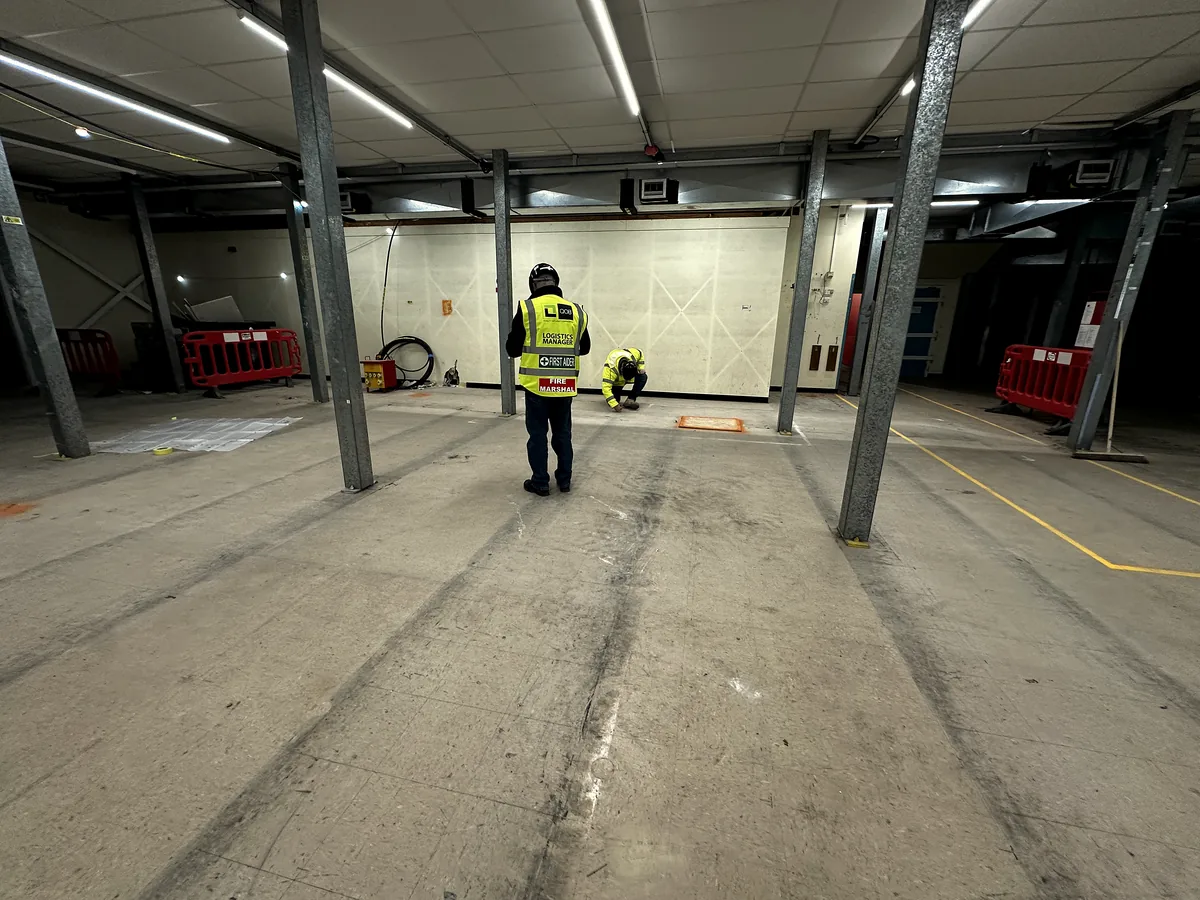
Housing associations and social landlords are natural users of non-destructive testing. The reason is not an interest in technology, it is the nature of the stock they manage. Many associations hold thousands of homes of widely varying age and construction, much of it built decades ago, and is under steady pressure to keep that stock safe, compliant, and well maintained on a fixed budget. Non-destructive testing fits that brief well. Here is how it is used, and how to build it into a planned programme.
Why NDT suits social housing
A social landlord’s estate is rarely uniform. It spans system-built blocks, traditional brick-and-block housing, mid-rise concrete-framed flats, and post-war estates of every description. Drawings are often incomplete, and the construction type of a given block is not always obvious from the outside. Before you can plan maintenance properly, you need to understand what you are maintaining.
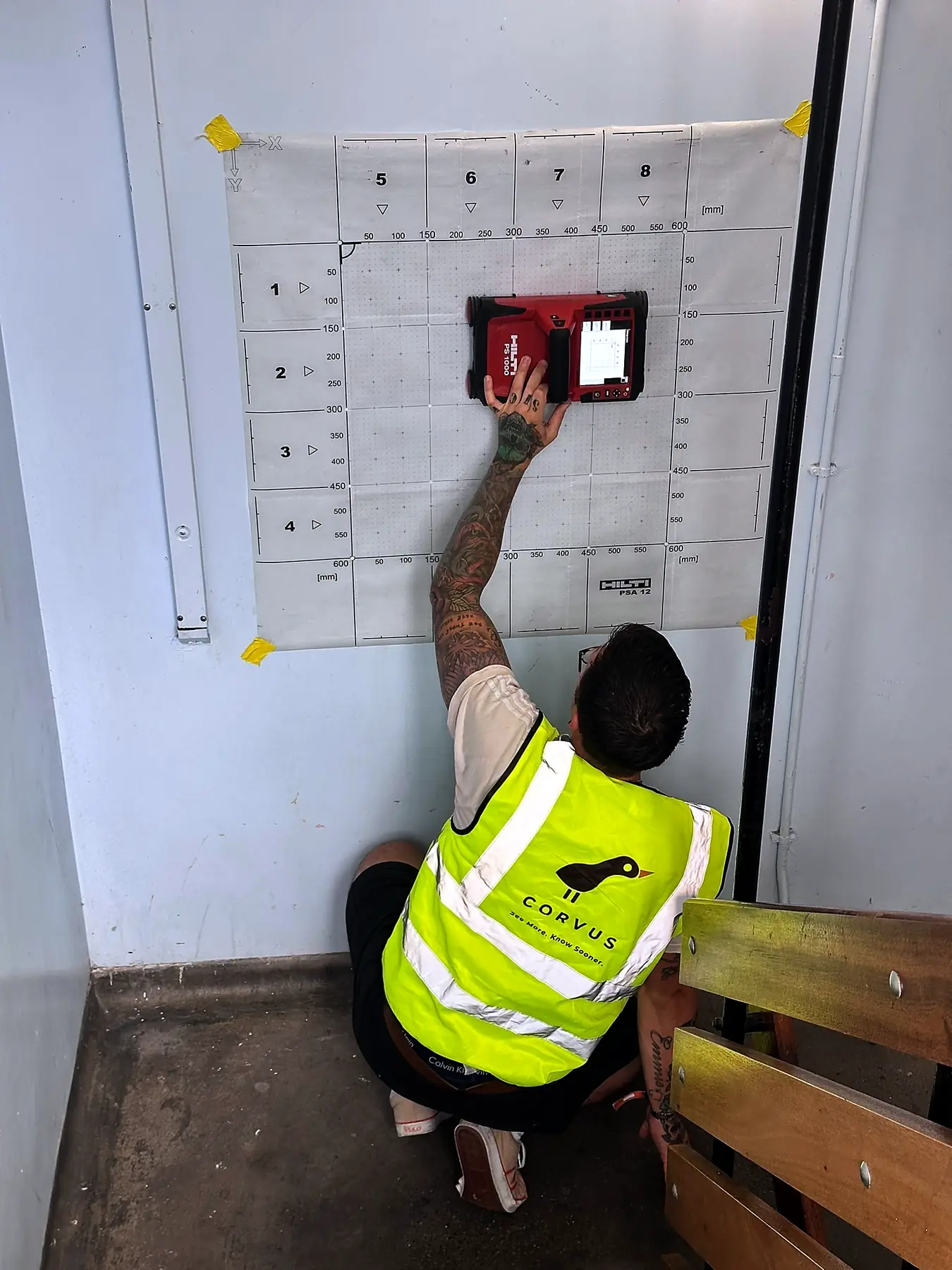
Non-destructive testing answers that question without tearing the building apart. NDT covers a family of techniques, GPR scanning, electromagnetic cover scanning, rebound hammer testing, half-cell potential surveys, and core sampling among them, that together build a picture of a structure’s condition. For a landlord, the appeal is practical. The testing is non-intrusive or minimally intrusive, which means it can be done in occupied homes with limited disruption to tenants, and it produces evidence rather than assumption.
Where it is used across the stock
NDT and GPR turn up across the range of work a housing association manages:
- Structural appraisal of ageing blocks. Establishing construction type, reinforcement layout, and concrete condition in older concrete-framed and system-built buildings, where the original detailing is uncertain.
- Condition assessment of balconies and walkways. Exposed concrete elements that carry people and deteriorate from weather and chloride exposure, a clear safety priority.
- Pre-works investigation. Scanning slabs and walls before retrofit, re-roofing, structural repairs, or new installations, so trades do not drill blind into unknown structure.
- Investigating defects. Diagnosing cracking, spalling, or damp by establishing what is happening inside the fabric rather than guessing from the surface.
Across all of these, the common thread is replacing uncertainty with evidence, which is exactly what a landlord needs to direct limited budget to the homes that genuinely need it.
GPR and concrete testing together
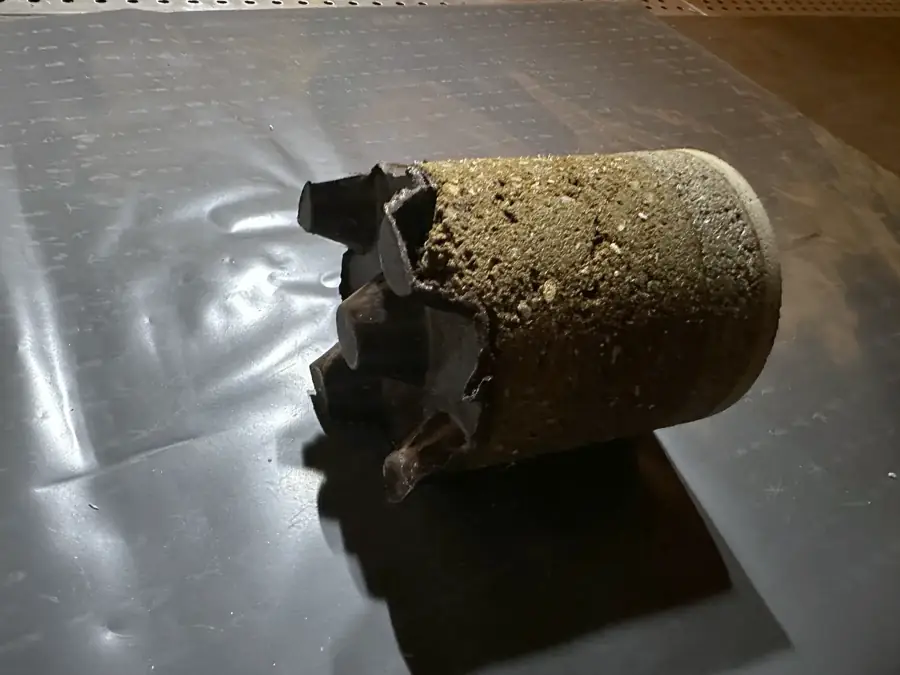
GPR and concrete testing do different jobs and work best as a pair. GPR maps: it locates reinforcement, estimates element thickness, finds services, and identifies voids or anomalies across a whole element quickly and non-intrusively. Concrete testing assesses condition: rebound hammer testing gives an indication of surface hardness, half-cell surveys map corrosion activity, and core sampling confirms strength and condition at specific points.
On a housing block, the sensible sequence is to use GPR to survey the structure broadly and identify the areas of concern, then target the more involved condition testing on those areas. That keeps the number of cores and the disruption to tenants to a minimum while still producing a representative result. The mapping guides the testing, and the testing confirms what the mapping suggests.
Building it into a planned programme
The greatest value comes when testing is planned rather than reactive. A landlord that only investigates a structure after a defect appears is always working at the back foot, and emergency investigation in an occupied building is the most disruptive and least efficient way to do it.
A planned approach treats condition assessment as part of the stock management cycle. Blocks of similar age and construction are surveyed on a sensible rota; baseline surveys are established so later surveys have something to compare against; and the results feed directly into the asset management plan and the long-term maintenance budget. That lets a landlord see deterioration coming, prioritise the homes most at risk, and plan repairs as funded work rather than emergencies.
Repeat surveys are particularly valuable. Concrete deterioration is gradual, and a single survey is a snapshot. A second survey on the same block, a few years later, shows the direction of travel, and that trend is what justifies spending decisions to a board.
Practical advice for commissioning
Start by grouping the stock. Identify the blocks of greatest concern, the oldest, the most exposed, the least documented, and survey those first. Brief the surveyor on construction type, build date, and known issues for each block, and plan tenant access carefully, with proper notice, because most of this work happens in occupied homes.
Treat NDT as a stock intelligence tool, not a one-off check. Used that way, it gives a social landlord an evidence base for keeping homes safe and spending maintenance budget where it does the most good, which is the core of the job.
What this means for your job
We have run a 17-block reinforcement programme for an East London housing association. See housing associations.