Understanding your scanning quote, what each line item means
A scanning quote is not just a day rate. Here is what each line item typically covers, what is often left out, and how to compare quotes that look different on the surface.
By Terry Bagust, Co-founder and Managing Director
A scanning quote can look deceptively simple, a figure, a date, a line about the scope. In practice, the figure is the sum of several distinct activities, and two quotes for the same job can be priced very differently because they include or exclude different things. If you compare only the headline number, you risk picking the cheapest quote and then discovering it never covered the work you actually needed.
This post walks through the line items you are likely to see, what each one covers, and where quotes tend to diverge.
On-site time
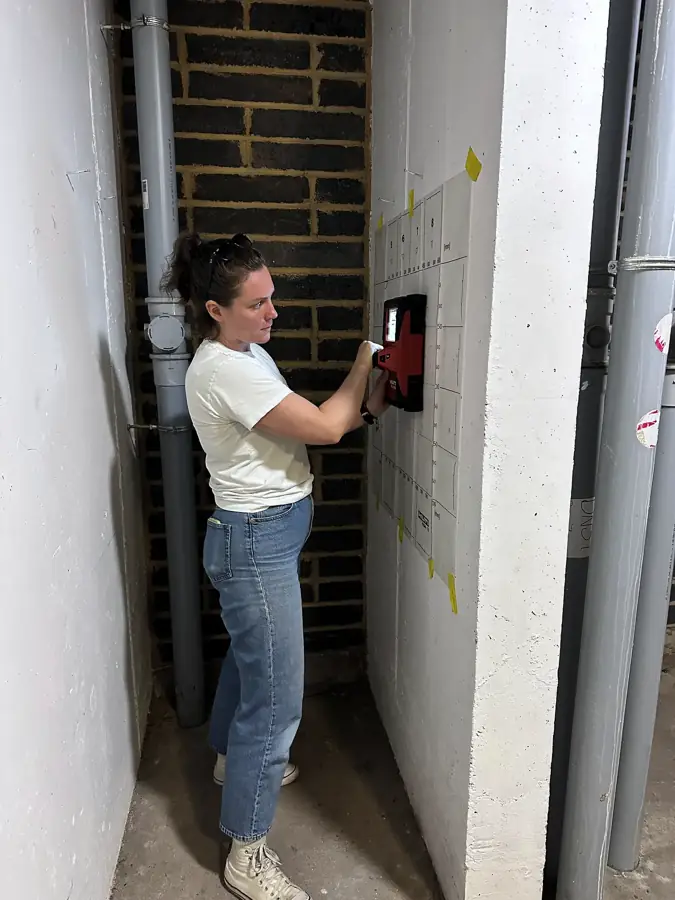
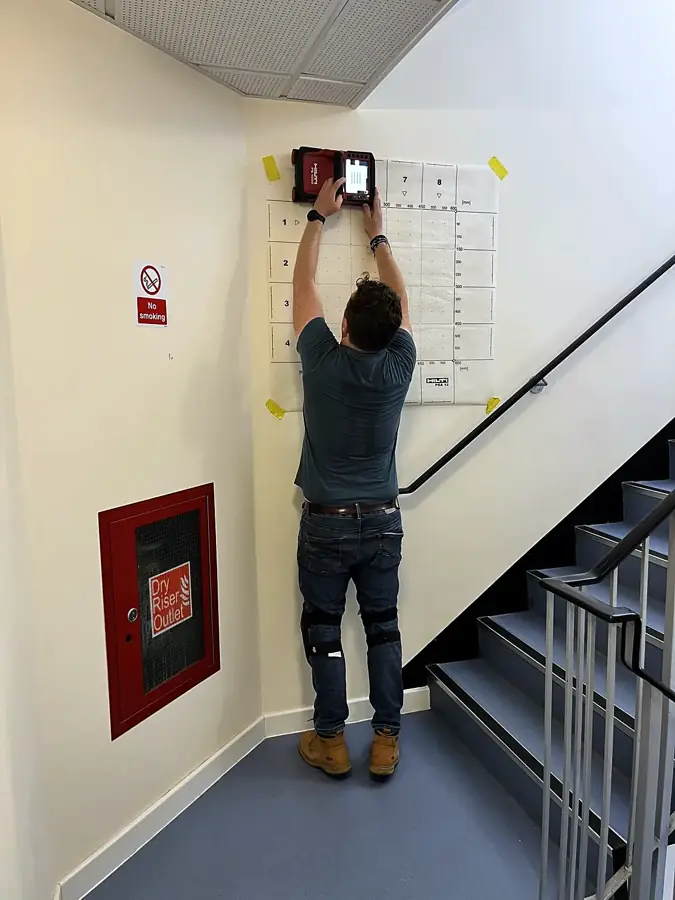
The largest component of most quotes is the time spent on site by the surveyor. This is usually expressed as a number of attendances or shifts rather than a precise hourly figure, because scanning is rarely a fixed-duration task. The area to be covered, the access available, and the level of detail required all affect how long the work takes.
Be wary of comparing on-site time without checking what each quote assumes about scope. A quote based on scanning twenty drill positions is not comparable to one based on a full structural survey of the same slab, even if the day count looks similar. Ask each provider what their on-site allowance is actually based on.
Mobilisation and travel
Most quotes include a mobilisation element, the cost of getting the surveyor and equipment to site and back. On a local job this is minor. On a remote site, or one requiring overnight stays, it can be significant. Some providers fold mobilisation into the day rate and some itemise it separately, which is one common reason two quotes look different at first glance.
If your project has several phases spread over months, ask whether mobilisation is charged per visit. A job that needs six separate attendances carries six mobilisations, and that can add up quietly.
Marking-out and on-site deliverables
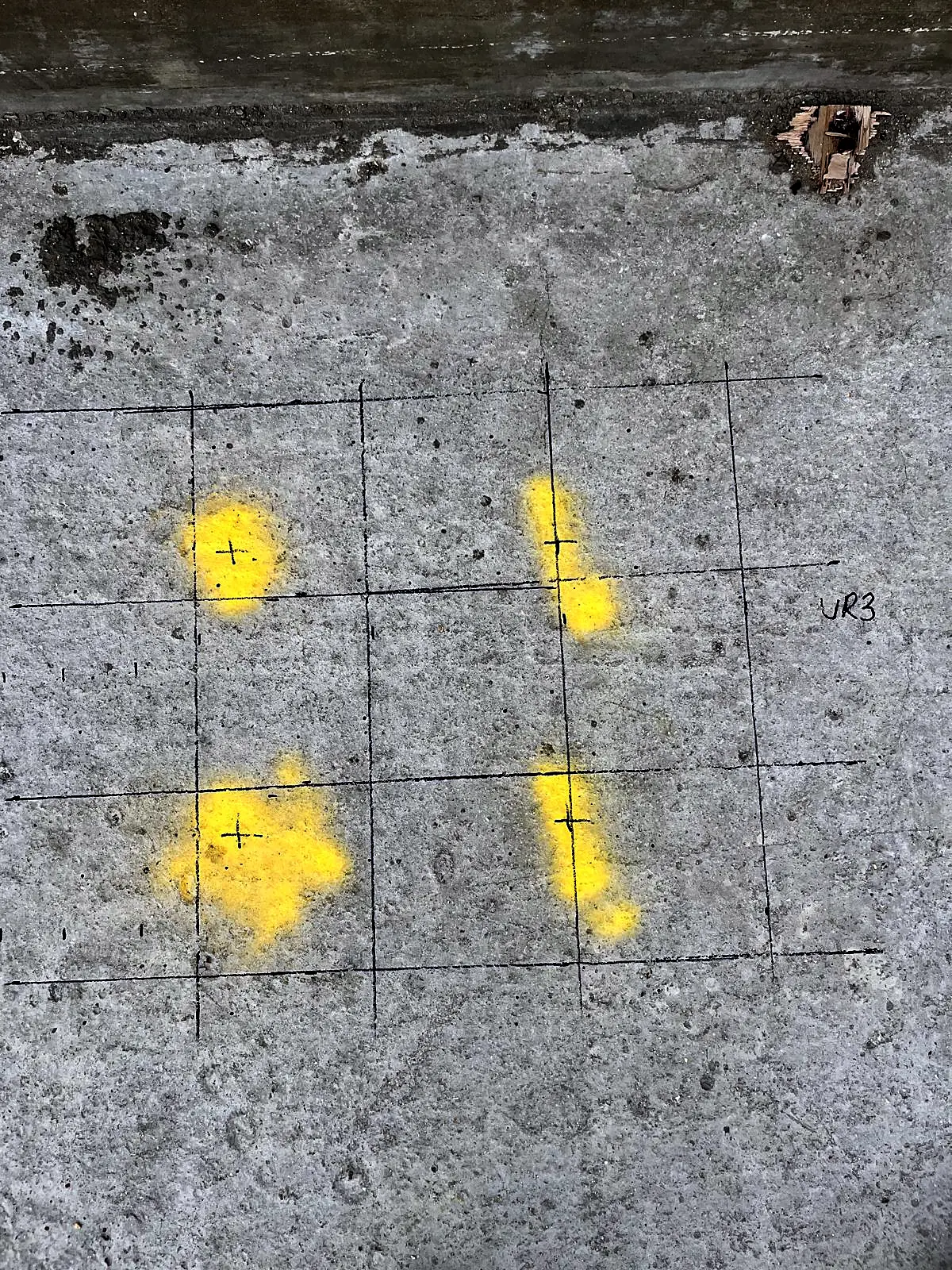
If you need findings marked directly onto the structure, drill positions marked clear of located targets, reinforcement traced in paint or crayon, services chalked onto a slab, that is usually a specific line item or an assumed inclusion. Some quotes include it by default; others treat it as an extra. Marking-out is often the deliverable the site team actually relies on, so check it is there.
Reporting and data processing
Scanning generates raw data that has to be interpreted, processed and presented. A quote should make clear what the reporting deliverable is, because this is where quotes diverge most sharply. The options typically range from a brief site record of the marked positions, through to a full annotated report with CAD files, tied to the project grid where the client supplies it.
A lower quote is sometimes lower simply because it includes only a minimal record. That may be exactly what you need, but if your engineer expects the CAD on their project grid and nobody has supplied it, the gap will surface later. The most useful question to ask is: what will I physically receive, and in what format?
Equipment and specialist provision
Different scanning tasks need different equipment, and some jobs require more than one system, ground-penetrating radar for general coverage, a separate tool for shallow reinforcement detail, or larger antennas for deep work. Where specialist equipment is needed, it may appear as its own line. If a quote seems low for a technically demanding job, check that the right equipment is actually included rather than assumed away.
Access, working hours and site constraints
Several factors that have nothing to do with scanning itself can affect a quote:
- Out-of-hours working. Night or weekend attendance to suit a live environment usually carries a premium.
- Access provision. Scanning at height or over voids may need scaffolding, a MEWP or a mobile tower. Quotes vary on whether access is included or assumed to be provided by the contractor.
- Site inductions and documentation. Time spent on inductions, permits and method statements is real cost. Some quotes allow for it; some do not.
When you compare quotes, confirm what each one assumes you are providing. A quote that excludes access provision is not cheaper, it has simply moved that cost onto your own budget.
What is often left out
A few things are commonly outside the base quote and worth checking for explicitly:
- Return visits caused by access being unavailable on the day, or the area not being clear of stored materials.
- Re-scanning after a design change moves the area of interest.
- Additional reporting beyond the agreed deliverable, such as a revised CAD plan after coordination.
None of these are unreasonable to charge for. The problem only arises when they are unexpected. A clear quote states its assumptions so that you know what triggers an extra.
Comparing quotes fairly
The fairest comparison is not figure against figure but scope against scope. Before you decide, make sure each quote answers the same questions: what area is covered, what equipment is used, what you will receive, who provides access, and what assumptions about site conditions underlie the price. Once those are aligned, a difference in the headline figure means something. Until they are, it does not.
A well-constructed quote is itself a useful document. It tells you the provider has understood the job, thought about the constraints, and set out clearly what you are buying. If a quote is a single line with no detail, that is worth a conversation before you rely on it.
What this means for your job
Our quotes itemise the survey, travel and deliverables so you can compare like with like. Get a quote.