Void detection using GPR, finding cavities under slabs
GPR is a well-established tool for finding voids under concrete slabs, beneath roads, and in the sub-base. Here is how it works and what the results look like.
By Terry Bagust, Co-founder and Managing Director
Voids beneath concrete are a common and serious problem. A cavity under a ground-bearing slab removes the support the slab was designed to rely on, and the consequences range from cracking and settlement to, in the worst cases, sudden collapse. The difficulty is that voids are invisible from the surface until the damage shows. Ground-penetrating radar is a well-established way to find them before that happens. Here is how GPR void detection works, what it can and cannot tell you, and how to commission it.
Why voids form
Voids develop for a range of reasons. Water is a common culprit: leaking drainage or services wash out fine material from the sub-base, leaving a cavity. Poorly compacted fill consolidates over time and settles away from the underside of the slab. Made ground and reclaimed sites contain organic or compressible material that decays or compresses. Old structures, basements, culverts, and disused services leave cavities that were never properly filled. In each case the result is the same, concrete bridging an unsupported gap.
The risk depends on the size and position of the void and the load the slab carries. A small void under a lightly loaded slab may be tolerable; a large void under a trafficked road or a heavily loaded warehouse floor is not.
How GPR detects voids
GPR works by sending radar pulses into the ground and recording the energy that reflects back. Reflections happen wherever the radar pulse crosses a boundary between materials with different electrical properties. A void, an air or water-filled gap, is a strong contrast against surrounding concrete or compacted fill, so it produces a distinct reflection.
An air-filled void changes the speed of the radar signal and typically shows as a bright reflection with a characteristic reversal in the signal compared with the surrounding material. A water-filled void produces a different signature. An experienced operator reads these signatures, along with the way the slab reflection behaves above a suspected cavity, to distinguish a genuine void from other features.
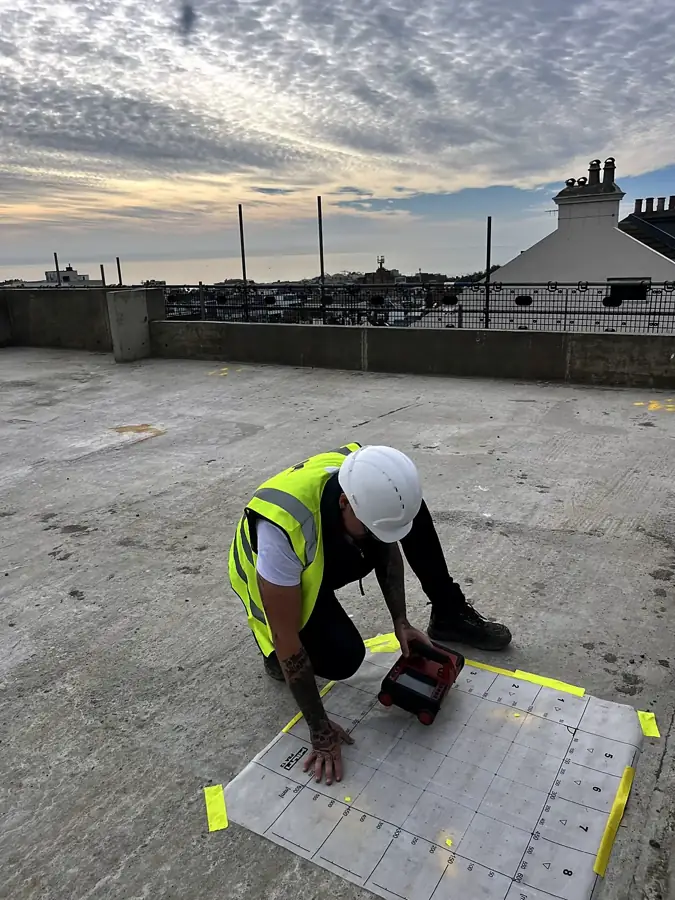
The survey itself is non-destructive and non-intrusive. The operator scans the surface along a grid of lines, and the spacing of those lines is chosen to suit the size of void that matters for the structure. Closely spaced lines find smaller cavities; a coarser grid covers a large area faster but may miss a small isolated void between scan lines.
For large areas, car park decks, distribution centre floors, sections of highway, vehicle-mounted or array GPR systems cover ground far faster than hand-pushed equipment while maintaining usable line spacing.
What the results look like
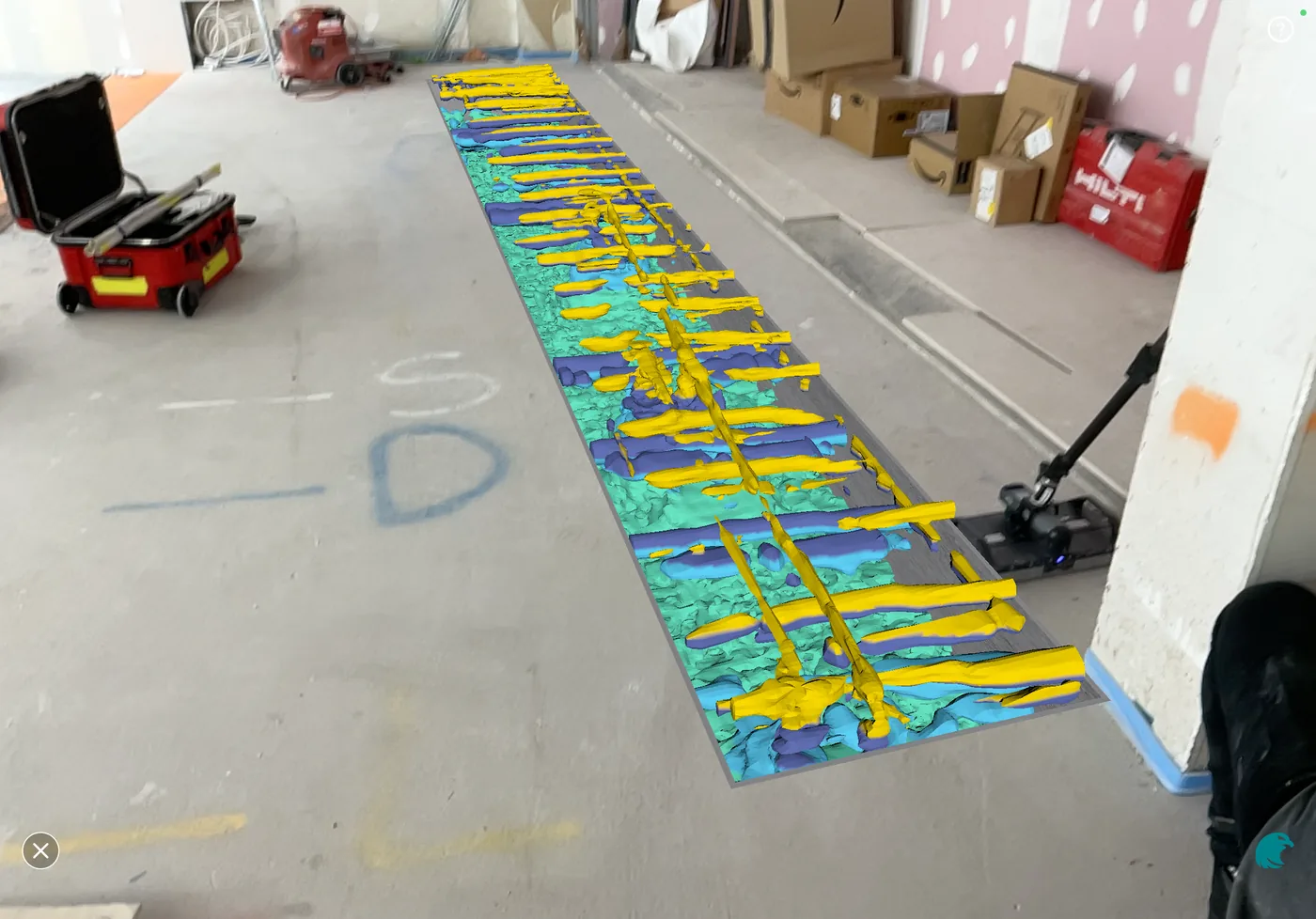
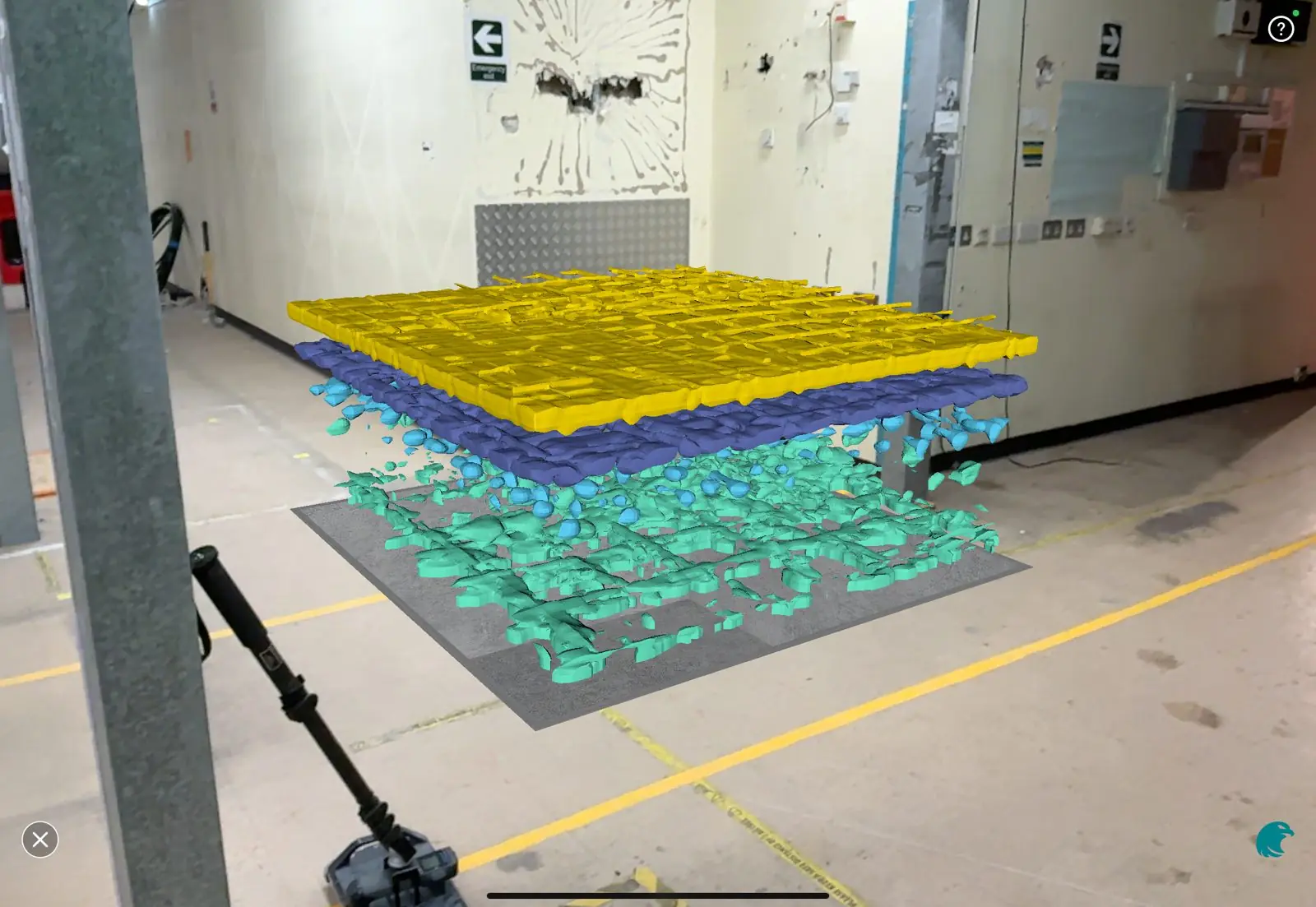
A GPR void survey is normally delivered as a plan of the surveyed area with anomalies marked: zones where the data is consistent with a void, graded by confidence. Alongside the plan, the surveyor can provide the radar profiles themselves, which show the reflection signatures the interpretation is based on.
It is important to be realistic about what the survey delivers. GPR is good at indicating where a suspected void is and giving a sense of its lateral extent. It is less precise about the exact depth and vertical thickness of a cavity, particularly a thin one, because a void presents a boundary rather than a measurable body. The survey identifies and locates anomalies; it does not always quantify them exactly.
For that reason, a void survey often recommends targeted confirmation, a small number of intrusive checks, such as a drilled probe, at the locations the GPR has flagged. The GPR turns a whole-area concern into a short list of specific points worth confirming, which makes any intrusive work efficient and proportionate.
Limitations to be aware of
GPR void detection has real limits, and a good surveyor will be honest about them:
- Heavily reinforced slabs scatter and weaken the radar signal, which can mask features beneath the reinforcement. A densely reinforced slab is harder to see through than a lightly reinforced one.
- Wet or clay-rich ground absorbs radar energy and reduces the depth GPR can usefully reach.
- Very thin voids may not produce a clear enough reflection to be distinguished from the normal slab-to-sub-base boundary.
- Depth and thickness estimates are approximate unless calibrated against a known reference on the same site.
None of these rule GPR out, but they shape what the survey can deliver and why confirmation is sometimes recommended.
When to commission it
GPR void detection is worth commissioning when a slab or pavement shows cracking, settlement, or movement and the cause is unclear; when a leak or drainage failure is suspected of washing out the sub-base; before loading a floor more heavily than it was designed for; and as a condition check on slabs over made ground, old structures, or known buried features. On roads and large hardstandings, void detection can be part of a pavement condition assessment.
Practical advice
GPR is a strong non-intrusive tool for finding voids beneath concrete, and on a large area it is quick and gives broad coverage. Brief the surveyor on what you suspect and what loading the slab carries, agree a line spacing that suits the size of void that matters, and expect the survey to locate anomalies rather than measure every cavity precisely. Used to target a short programme of intrusive confirmation, GPR void detection turns an open-ended concern into a clear, manageable picture.
What this means for your job
If you suspect voids under or inside a slab, we map likely void areas before anyone loads, cuts or repairs it. See void detection.