Ground radar and a records search at DWP Pembroke Dock
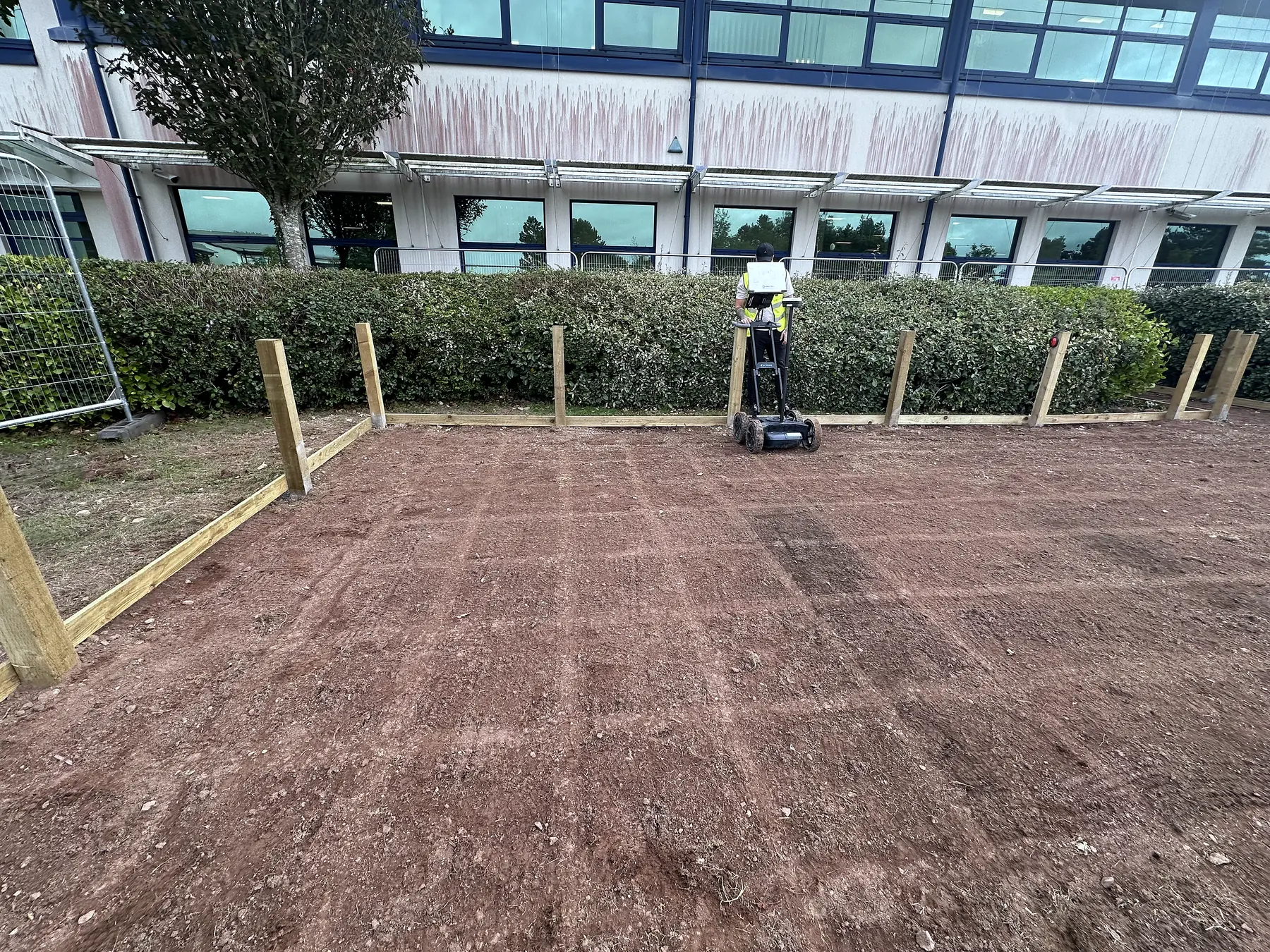
BTL Contracts were back on DWP sites in September, this time at Trident House in Pembroke Dock. Corvus ran a utility records search and a ground GPR survey over the works area, positions fixed by GNSS, and issued the report and drawing ahead of the works.
The brief
BTL Contracts had works planned outside Trident House, the DWP office by the Cleddau Bridge in Pembroke Dock. Having used us at Ashington in July, they asked for the same survey again, with a utility records search added so the radar findings could be read against what the utility owners say is in the ground.
What we did
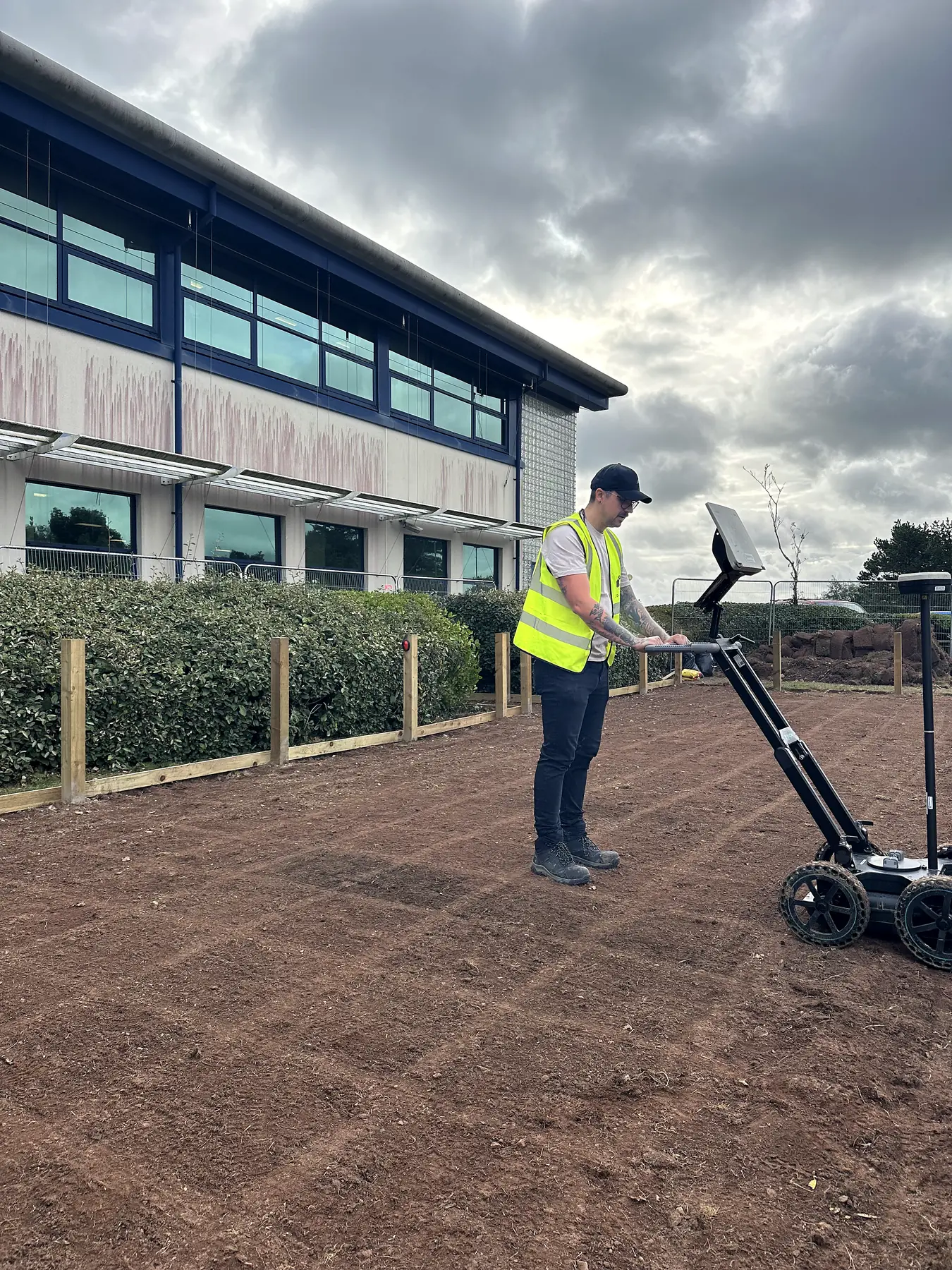
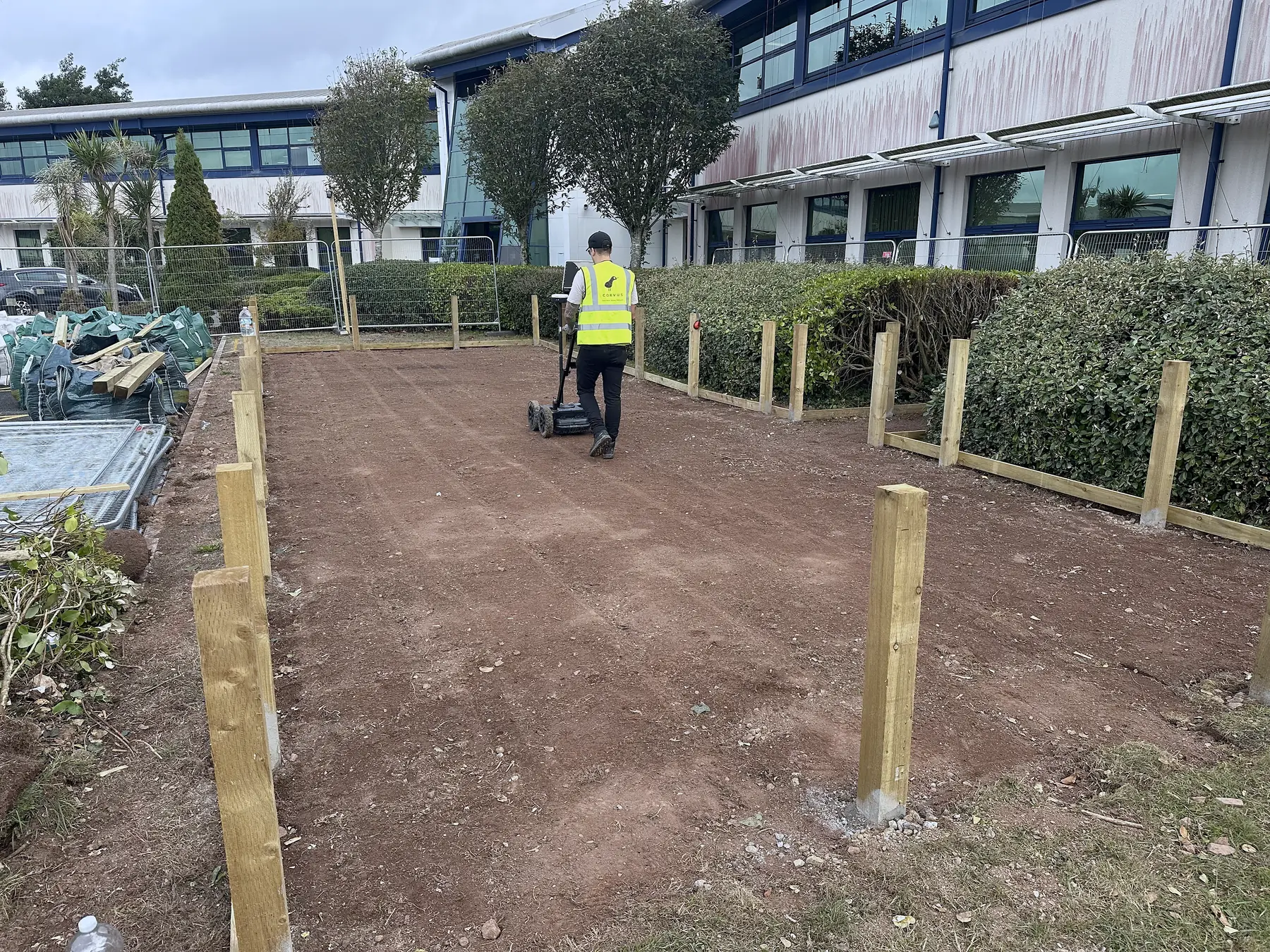
Before site we requested plans from the statutory undertakers for the area. On 10 September 2026 we gridded the cleared works area and ran a Proceq GS8000 ground GPR over it in both directions, every pass positioned from the GNSS mast on the cart.
What BTL received
The same deliverable as Ashington: a report with each radar anomaly given a depth, an extent, a note on whether it sits within the dig depth and a recommended action, plus a separate drawing the dig team can set out from. The records search went with it, so the drawing could be read against the undertakers’ plans before a spade went in.
The report keeps to the same rules. Anomalies are anomalies until proven. The survey does not confirm the absence of services and is not a permit to excavate. Hand digging to HSG47 still applies.
Why it matters
Two DWP sites at opposite ends of the country for the same contractor in one summer. Travel is itemised on the quote, the method is the same wherever the site is, and the report reads the same whether the job is in Northumberland or Pembrokeshire.
We now deliver full PAS 128:2022 utility surveys, with electromagnetic location alongside GPR and positions fixed by GNSS RTK. Excavating on a site where the records are thin? Get a quote.