What is in a Corvus report
What you get from a Corvus scan: marks on the slab before we leave, a signed report and CAD plan within 5 working days, and the limits stated plainly. Plus what to check on any surveyor's deliverable.
By Terry Bagust, Co-founder and Managing Director
A scan is only as useful as what you are handed at the end of it. Plenty of survey jobs end with a pile of files nobody can act on: raw data, a vague report, no marks on the concrete, no drawing. This page sets out what a Corvus deliverable contains, and what to check on any surveyor’s work, ours included.
It starts with the question
Before we plan anything, we want to know what decision the scan has to support. A pre-drill scan for one core is a different job from cover data for an engineer’s calculation, or a record of a whole floor before a refit. The question decides the method, how dense the scanning is, how much detail goes in the report and what drawing you need.
A clear brief gets a tight deliverable. A vague brief gets a vague one. That is why we spend time on the first phone call.
On the day
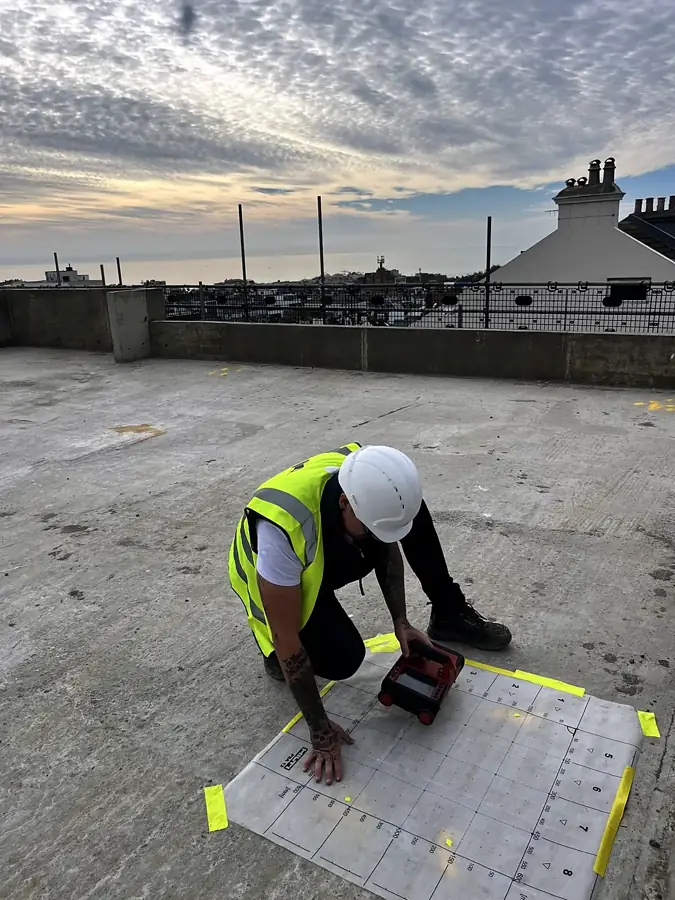
We send a method statement and risk assessment before we attend. On site, findings are marked on the slab, wall or column as we go, in paint or chalk, and photographed before we leave. The surveyor walks your site team or engineer through the marks before they go. That handover covers what was found, what is inferred, and whether anything needs checking intrusively.
You have the marks before we leave site. Nobody waits for the report to start drilling at positions marked clear of located targets.
The report
The written report comes within 5 working days. Larger jobs are agreed on the quote. It contains:
- the brief and scope, restated in our words so you can check we understood it
- the method: instruments, settings and scan pattern
- findings for each scan area: positions, depth-indicative readings, photographs of the marks
- cover statistics or other analysis where the data supports it
- the limitations, stated plainly
- a recommendation where one is appropriate
- the name and signature of the surveyor who did the scan
It is written in plain English for the person who has to act on it.
The drawing
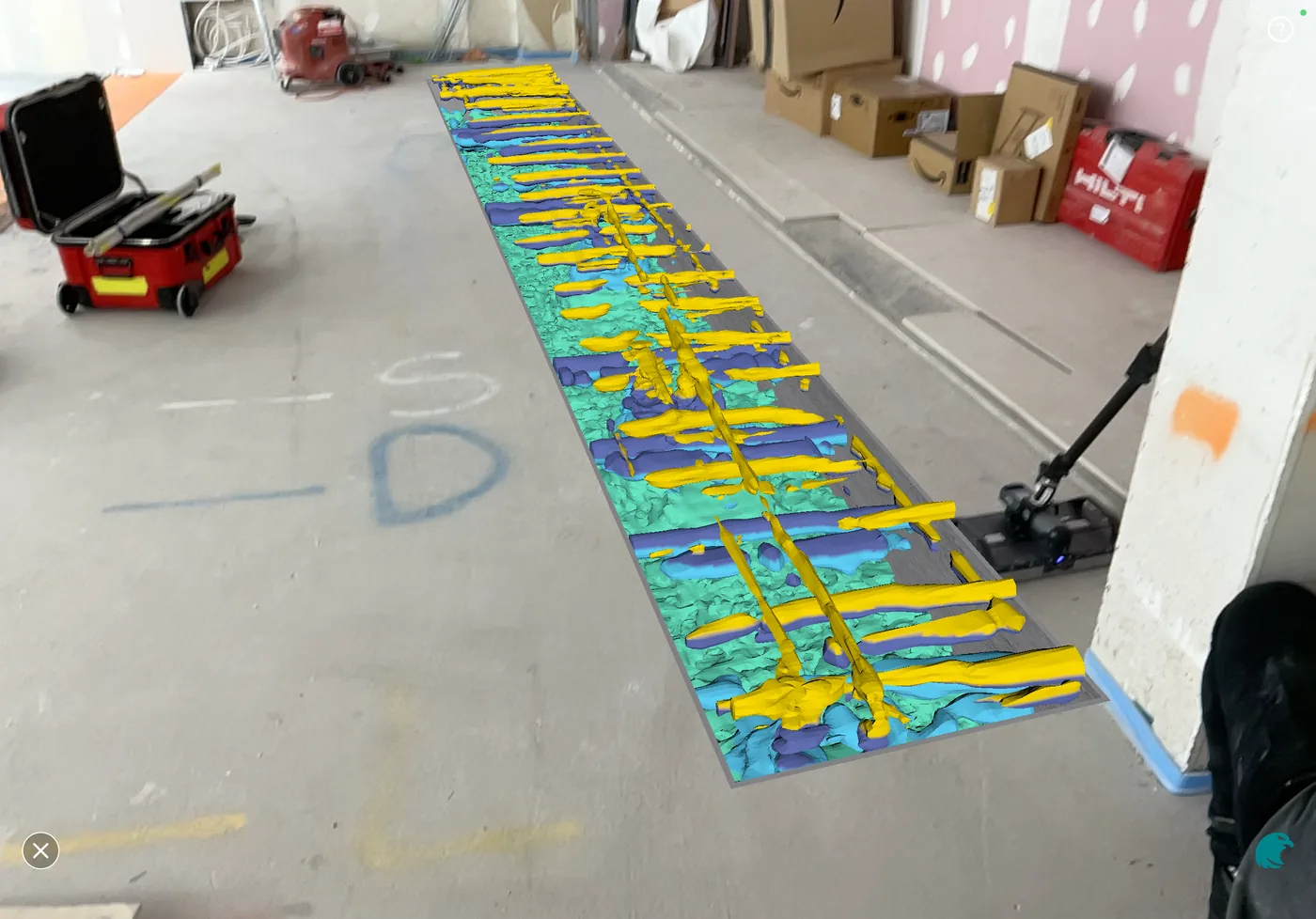
For most concrete scanning and ferro scanning, a DXF or DWG file comes with the report, annotated with depths and references. It comes on a local grid set out on site. If you need it on your project coordinates, send us your grid or control points at the brief and we tie it in. If your project uses a particular format, tell us then too.
Reports and drawings are built in Corvus Insights, our own software. It reads the scan data and flags likely targets. The surveyor decides on every one, and the surveyor signs the report.
Concrete testing and LiDAR
For concrete testing, you get the method, the test log with photographs, the raw results, the analysis and, for any cores, the certificate from the independent UKAS-accredited laboratory that tested them.
For LiDAR, the registered point cloud is the main deliverable, in the format you need, with a registration report and any drawn plans or sections agreed in the brief.
Limits, stated up front
Every method has limits. GPR depth depends on the concrete and its moisture. Ferroscan readings can be masked by closely spaced bars. Bar diameter is an estimate within a range. A report that does not say so is over-claiming, and the moment it is queried the limits come out anyway. We put them in the report.
What to check on any scanning deliverable
When a report lands, ours or anyone’s:
- Check it against the brief. Every item there, in the format you asked for.
- Open the CAD file and check the scan areas match your plan.
- Read the limitations and recommendations, not just the summary.
- Check it is signed by a named surveyor.
- Make sure the marks on site were photographed.
If anything is missing or wrong, raise it before any drilling depends on it.
What this means for your job
Want to see one for your job? Get a quote.