Cable avoidance survey: what a CAT and Genny sweep finds, and what it misses
A cable avoidance survey is the quickest way to make a small dig safer. What the CAT and Genny actually detect, where they go quiet, and when the job needs a full PAS 128 survey instead.
By Terry Bagust, Co-founder and Managing Director
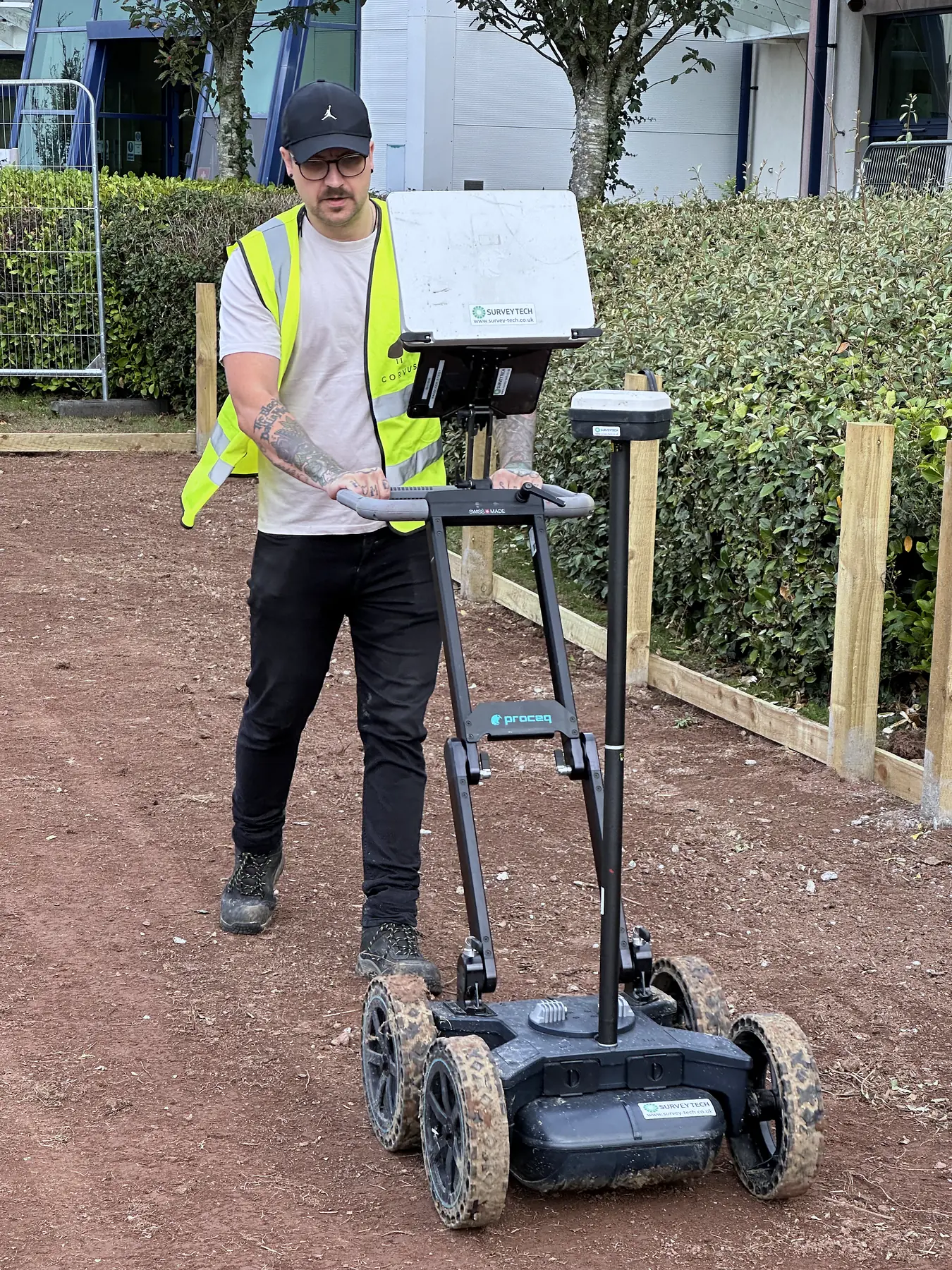
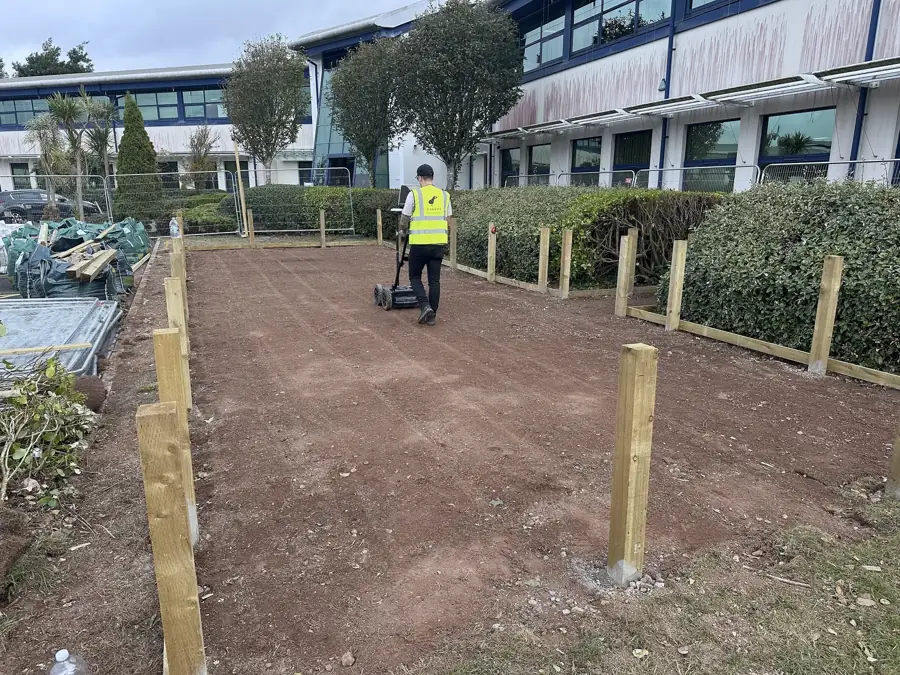
A cable avoidance survey is the electromagnetic sweep most people picture when they hear “CAT scan” on site: a surveyor walking the works area with a Cable Avoidance Tool, a Genny signal generator clipped to whatever can be connected to, and paint going down where the locator sings. It is fast, it is cheap and on a small, well-recorded site it is often enough. It is also the survey most often oversold. This article sets out what the sweep finds, what it cannot find, and how to tell when the dig needs more.
What the CAT and Genny actually detect
A CAT is a receiver. On its own it listens for two things. In power mode it picks up the 50 Hz field around a cable that is carrying current. In radio mode it picks up long-wave radio signals re-radiated by long metallic conductors such as cables and metal pipes. Both are passive: the CAT finds what is already radiating.
The Genny is the transmitter. It puts a known signal onto a service, by direct connection to an exposed point, by a clamp around a cable or pipe, or by induction through the ground. The CAT then follows that signal and, with an active signal, can estimate depth.
With suitable signal conditions and access, the two will locate:
- Live, loaded power cables.
- Metallic water and gas mains that can be energised with the Genny.
- Steel ducts, metal drain pipes and other long conductors.
- Street lighting and telecoms cables, when they are carrying current or a signal can be applied.
What the sweep misses
The gaps are where excavations go wrong.
- Plastic pipes. Modern water and gas services are mostly polyethylene. There is no metal to energise and nothing for a passive sweep to hear. Unless a tracer wire was laid with the pipe and is accessible, the CAT walks straight over it.
- Dead and unloaded cables. A cable with no current gives nothing in power mode: street lighting by day, a disconnected supply to a demolished building, a pot-ended cable left in the ground. It may still be traceable in radio mode or where a Genny signal can be applied, so silence in one mode does not mean the cable is absent. HSG47 says pot-ended cables are treated as live.
- Clay and concrete drains. Non-metallic, no signal.
- Fibre. No conductor unless armoured or laid with a tracer.
- Depth. Passive readings give no reliable depth at all. An active signal gives an estimate, and that estimate degrades with congestion and with services running close together.
- Services parallel to the sweep. A line only crosses the CAT’s field when the surveyor walks across it. A sweep in one direction can miss a service running the same way.
HSE’s guidance in HSG47 is blunt about this: a locator finds some services, not all of them, and the plans are not reliable either. Hand digging and trial holes remain the control.
A good cable avoidance sweep
Whether the sweep is a stand-alone job or the first pass of a bigger survey, the method is the same. The whole works area is walked in both directions in power and radio mode, not just the line of the trench. The Genny is applied to every service that can be reached: the meter tail, the hydrant, the lamp column, the cabinet. Every detection is marked in paint, colour-coded by service type, with the depth estimate written next to it where one was possible. A short sketch or photo record goes to the site manager before the surveyor leaves.
What the sweep cannot do is tell you where the plastic water main is, so a cable avoidance survey on its own is a statement about cables, not about the ground being clear.
When the job needs a PAS 128 survey
A full PAS 128 utility survey adds the three things the CAT and Genny cannot give you: a records search from the statutory undertakers, a GPR survey over the same ground to look for plastic, clay and other targets the locator cannot detect, subject to ground conditions, depth and target contrast, and a drawing with a quality level on every line. The drawing is what a permit to dig can be signed against.
The job needs that fuller survey when:
- Plastic gas or water mains are plausible, which on a UK street is almost always.
- The records are old, missing or contradict each other.
- A piling rig, a trencher or a mechanical excavator is going in, not a hand-dug pit.
- The client or principal designer has specified PAS 128.
- The area is large enough that a day of GPR is cheap against a week of hand digging.
For a single small pit on a site with recent records and a visible service route, a cable avoidance sweep marked on the ground, plus hand digging to HSG47, is a reasonable control. For anything bigger, it is the first hour of a two-day survey.
What Corvus does
We run the sweep with a Radiodetection RD8200 and a Genny, then the Proceq GS8000 ground radar over the same ground, with positions fixed by GNSS RTK. You get a marked site and, on a full survey, a drawing you can dig to. We will tell you honestly when a sweep on its own is enough and when it is not.
Booking a dig? See PAS 128 utility surveys or get a quote. For what the sweep feeds into, read HSG47 explained and permit to dig: what it needs.